Ratings Analysis: The closing ceremony of the Summer Olympics (1.16, -0.30) descended further on NBC, but the Peacock network held their lead nonetheless. Over on CBS, Big Brother (0.33, -0.16) plummeted for an episode that aired later than usual. On ABC, the Disney+ documentary Jim Henson: Idea Man (0.15) did not attract much attention and dropped from the AFV repeat (0.24) that led into it. Fox's Krapopolis reruns (0.05/0.04/0.04/0.07) were trounced by The CW's airing of The Notebook (0.08). Key: (R) = repeat.
Showing posts with label movie reviews. Show all posts
Monday TV Ratings 1/8/24: Pretty Baby: Brooke Shields Weak on ABC, AGT: Fantasy League Jumps (UPDATED w/Analysis)
Ratings Analysis: Documentary film Pretty Baby: Brooke Shields (0.20) was a fairly weak performer on ABC but at least beat out two of the three NCIS reruns (0.20/0.15/0.17) that CBS aired. On NBC, America's Got Talent: Fantasy League (0.38, +0.12) surged in week two, going more than a full tenth above last week's lackluster launch. Fox aired repeats of Hell's Kitchen (0.20) and Celebrity Name That Tune (0.15). The CW re-ran Penn & Teller: Fool Us (0.04), Masters of Illusion (0.02), and World's Funniest Animals (0.03).
Finals Update: All shows held their preliminary ratings.
Special Review: Tomb Raider (2018)
After her successful and thought provoking breakout film, Ex Machina, I was looking forward to seeing Alicia Vikander in a new light, from kicking mental ass to kicking physical ass.
Full disclosure, I'm not really a fan of the Tomb Raider franchise. I only played it as a child and all I did was run around Lara's house and mess with her Butler. So throughout this review I will not be making any references to any games or the previous films.
What I do know is that video game movies don't exactly have the best reputation in terms of quality. I walked into the theatre expecting to watch a mediocre action adventure film and that's ...... exactly what I saw.
Tomb Raider follows the adventures of Lara Croft, a young woman who goes in search of her crappy dad who ditched her to go find a dead Japanese queen. At the same time, Lara must also stop a mysterious organization from taking the power of the queen and potentially destroying mankind. So yeah, it's a bit much.
If you were hoping to watch a good old action packed adventure, then you're gonna be satisfied. But if you were hoping for something more, then I'm afraid this film won't be worth your time. Sure we got a great cast and some decent action scenes but the story and acting could have been better. They got Alicia, Walter Goggins and Dominic West, all amazing actors but I felt like they weren't at their best throughout the film. And a lot of the events taking place in the film felt like sheer luck. I didn't get much of a badass vibe from Lara, only feeling like she was strong and lucky. It kinda killed my enjoyment of some of the adversities she faced.
Overall, I thought the film wasn't the worst video game adaptation ever but I don't think it's gonna change people's minds about video game adaptation films. The ending gave the feeling that there's more to come but were gonna have to wait and see if it does well at the box office, though I doubt I'd go to the cinema to watch any sequel of this franchise. If you wish to see it, then I suggest you wait till it comes out online or if the tickets are cheap at your local cinema.
Full disclosure, I'm not really a fan of the Tomb Raider franchise. I only played it as a child and all I did was run around Lara's house and mess with her Butler. So throughout this review I will not be making any references to any games or the previous films.
What I do know is that video game movies don't exactly have the best reputation in terms of quality. I walked into the theatre expecting to watch a mediocre action adventure film and that's ...... exactly what I saw.
Image via Warner Bros.
If you were hoping to watch a good old action packed adventure, then you're gonna be satisfied. But if you were hoping for something more, then I'm afraid this film won't be worth your time. Sure we got a great cast and some decent action scenes but the story and acting could have been better. They got Alicia, Walter Goggins and Dominic West, all amazing actors but I felt like they weren't at their best throughout the film. And a lot of the events taking place in the film felt like sheer luck. I didn't get much of a badass vibe from Lara, only feeling like she was strong and lucky. It kinda killed my enjoyment of some of the adversities she faced.
Overall, I thought the film wasn't the worst video game adaptation ever but I don't think it's gonna change people's minds about video game adaptation films. The ending gave the feeling that there's more to come but were gonna have to wait and see if it does well at the box office, though I doubt I'd go to the cinema to watch any sequel of this franchise. If you wish to see it, then I suggest you wait till it comes out online or if the tickets are cheap at your local cinema.
Wakanda Forever: Black Panther Review
The Ratings Junkie
Tuesday, February 20, 2018

The Ratings Junkie
Written by Josh Pederson of Pop Culture Cosmos
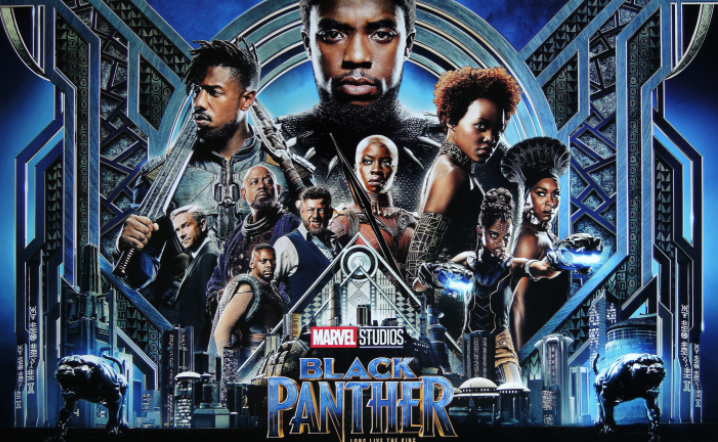
Wakanda Forever: Black Panther Review

Every kid grows up wanting to be a hero. It doesn’t matter what color your skin is, what your beliefs are or what kind of background you come from, everybody at some point in their life has wanted to save somebody. Comic books, Saturday morning cartoons, movies, growing up all of these things helped instill in us a sense of responsibility that if a time ever came when we have the ability to make a difference, it is our responsibility to act. Whether that means helping the elderly, standing up to a bully, telling the truth, or bringing people together as a community, we knew that the world needed good people willing to do good deeds for others. And as childhood fades into our teenage years and the luster and purity of those days slowly diminishes until we become adults and the world becomes sad and small, we look back on those days and remember them as an age of innocence and era of heroes. And while some of us resign ourselves to never look back at better days by throwing away the key to doors we locked years ago, others wear that key around their neck, looking for a door that will recall those memories to life. After all, we are living in an age of nostalgia. Marvel comics has thus far done an excellent job of bringing our childhood role models to life on the big screen – Warner Bros and DC not so much – but up until now, they’ve sort of locked themselves into a formula. Then Black Panther came along, and everything changed.

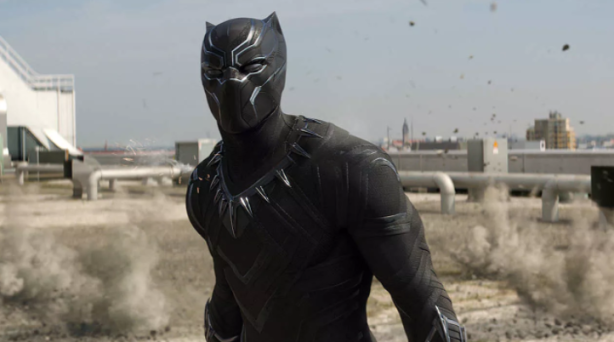
Black Panther takes place in the aftermath of Captain America: Civil War. After a brief run-in with what appears to be some human traffickers, T’Challa (Chadwick Boseman) returns home to Wakanda and must make his claim to the throne his father left behind. For those of you who are unfamiliar with the Black Panthermythos, after a meteorite fell from the sky, containing a rare mineral called vibranium, the Wakandan tribes went to war with each other to claim the power the vibranium had to offer. One day, a rare heart-shaped herb was discovered and consumed by a warrior, giving him super-human abilities. This warrior became the very first Black Panther and united the warring tribes of Wakanda, all of them except for one. Fast forward several hundred years and Wakanda is a thriving, advanced civilization with technology unlike anything the world has ever seen. Fearing the wars that would start if the rest of the world knew about this technology, they hid their civilization from the rest of the world, disguising Wakanda as a third world country. And just like in the comic books, the film has anybody who happens to know the secrets of Wakanda also looking to exploit them.
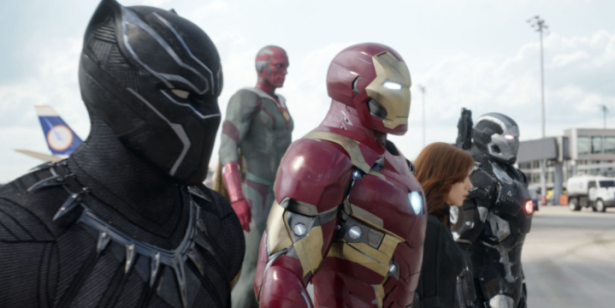
With the exception of T’Challa, two more characters carried over from previous films like Captain America: Civil War and Avengers: Age of Ultron, American Agent Everett K. Ross (Martin Freeman) who was part of the investigation team that went looking for Bucky Barnes and Ulysses Klaue (Andy Serkis) who was selling vibranium and got his arm cut off by Ultron. In Black Panther, he has a new arm, and it’s because of him that Killmonger (Michael B Jordan) finds his way to Wakanda and to the throne. Before we go on, here’s a quick rundown of the film’s story without getting too far into spoiler territory.
Like I mentioned above, Black Panther takes place in the aftermath of Captain America: Civil War. T’Challa returns home to claim the throne his father left behind. However, claiming a throne in Wakanda isn’t as easy as it sounds. In order for him to claim it, he must first defend it from anybody who might think that they have a better claim. Fortunately for T’Challa only one of the four Wakandan tribes challenges him. If you know the comic books, you might recognize this particular character as M’Baku the Man-Ape. For obvious reasons, they left out the second part of his title. Moving on, after nearly losing his fight against M’Baku, some cheering from the audience spurs T’Challa toward victory. It’s in the post fight scene that we get a good look at Wakanda and how advanced they are in their sciences, and it’s all thanks to vibranium.
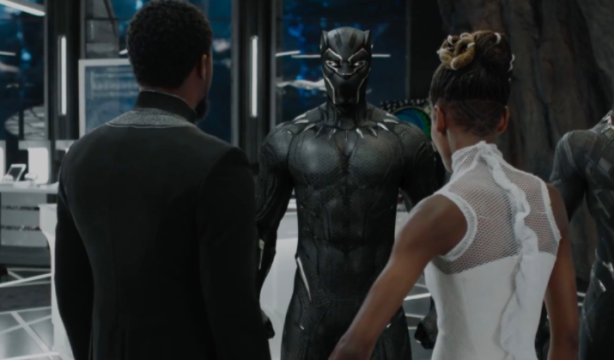
When news reaches T’Challa that Ulysses Klaue is alive and well, he sets off in search of vengeance for past sins Klaue committed against the people of Wakanda. The only problem is that the Americans are also after Klaue, and when Everett K. Ross shows up in the same South Korean casino as T’Challa and his crew, things become interesting. There’s some fighting, a car chase, some cool shots of the Black Panther running on buildings, and Klaue has a literal hand cannon that gets ripped out of his shoulder when he’s captured. While being interrogated, he spills the beans to Ross about Wakanda not being a third world country, but before Ross can probe further, Killmonger rescues Klaue only to kill him later on and use him to gain entrance to Wakanda. What better way to get in good favor with people than by bringing them their most hated enemy in a body bag? So long story short, it turns out Erik Killmonger is cousin to T’Challa and was orphaned after T’Challa’s father killed his father several years ago. Killmonger challenges T’Challa to the throne and T’Challa, after finding out the truth about Erik Killmonger, feels obligated to fight him. He loses and gets tossed off of a cliff. Using his newfound political power, Killmonger wants to bring Wakanda out of hiding by arming the oppressed with Wakandan weapons. After that, there’s some fire, a dream sequence, a lot of fighting, and a couple of cool after credit scenes.
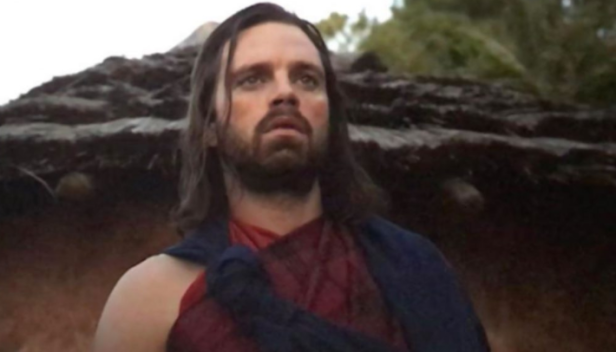
THE GOOD
Black Panther was a fun movie. I honestly can’t think of any better way to describe it. Everything from the writing to the way the film was shot was incredibly well done. Ryan Coogler, who also directed the Rocky spin-off Creed did a great job of taking a character whose comic book origins were steeped in the Civil Rights movements of the ‘60s and making him relevant to a modern crowd. Having worked with Michael B. Jordan before, he made Erik Killmonger one of the most tragic villains the MCU has ever had. His motives for doing what he did weren’t megalomaniac or driven by corporate greed like so many who came before him. In a way, he wanted to be a hero to people who grew up in the same kinds of communities that he did, in the same situations he faced. And in the end, you can’t really hate his motives, only the way he went about accomplishing them. But lets talk about Chadwick Boseman for a minute. His performance in Captain America: Civil War was one worthy of mention. He brought a drastic shift in perspective that he carried over into Black Panther; the mantle of responsibility. And if there’s anything that’s been overplayed in the MCU it’s irresponsible super heroes (particularly in origin stories). T’Challa not only had an obligation to his people, he had an obligation to his heritage and tradition, which is why he chose to accept Killmonger’s challenge for the throne. I can go on about the cast, but Lupita Nyong’o is also somebody who stood out in this film. As the love interest of Chadwick Boseman’s T’Challa, she played what could be considered the “conscience” of Wakanda by the playing on the theme that those of us who have ability to make a difference have an obligation to do so. And when T’Challa decides to continue his father’s isolationist policies by not offering aid to people in need outside of their borders, her disappointment is more than apparent, which plays slightly into the pseudo romantic plotline between her and T’Challa. The entire cast of this film was brilliant, but Martin Freeman and Andy Serkis are also deserving of honorable mentions. Fun fact, they haven’t been in a film together since The Hobbit. I guess that makes them the Tolkien white guys of the film. Get it? Because J.R.R. Tolkien? Alright cool. On a serious note, Andy Serkis was a genuinely fun character to watch. There wasn’t a single one of his scenes that didn’t have my eyes glued to the screen.
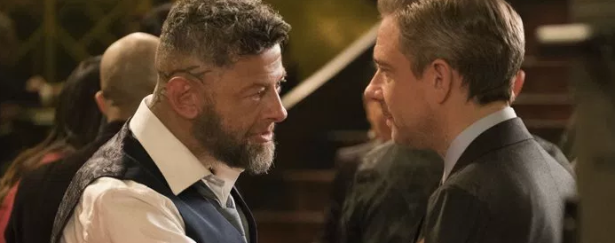
While I did enjoy the themes of the film, like responsibility to our fellow humans and the emphasis on the idea that anybody of any skin color or gender can be a hero, I really don’t want to play into the idea that this film was as revolutionary as all of the critics and bloggers are making it out to be. The reason I don’t want to play into it is because whatever racially inspired messages that Ryan Coogler was trying to convey weren’t meant for me. Neither were they meant for any other white critic or blogger to be preaching. There’s a difference between empathizing with what other people go through and understanding it. And I realize by vocalizing this point of view I’m going to be called racist by those very people, but it needs to be said. Again, the themes of the movie were great, and they were inspiring, but some of them weren’t meant for me. However, that doesn’t mean I don’t appreciate them being there. And as somebody who reviews films, this point of view is coming from a genuine fear that non-comic book and non-MCU fans are rushing to see this movie because of its diversity and a need to be relevant. The film’s diversity is only one of the many things that made it so great. There’s so much more to it than that.
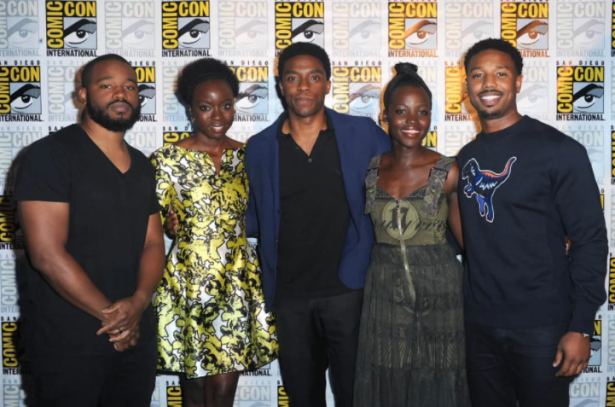
Other great things the film had going for it was cinematography, lighting and a very unique style of editing that made everything feel like it was flowing continuously even when the scenes changed. If you notice in many of the previous Marvel films, each one has a sort of gimmick. Whether it’s Dutch angles, slow motion, or jump cuts, they often experiment with things that don’t always work. Black Panther flowed smoothly from beginning to end, and with the exception of the soundtrack, it does a great job of keeping you present for the entire film.
THE BAD
I’ll keep this section brief, because as I’ll state again below, I haven’t watched a Marvel film that I’ve enjoyed this much in a long time. The most noticeably bad thing about this film is something that a lot of people are probably going to disagree with me on . . . the score. Other outlets like io9 are calling the score “stunning” but Ludwig Göransson, who has collaborated with Ryan Coogler on all of his other major films gets a little too experimental. There are some parts where the use of traditional African sounds work really well, and others where they don’t. For example, near the end of the film, Martin Freeman is flying a jet around trying to blast weapons out of the sky. The music goes from epic orchestral to traditional African. That’s like playing the soundtrack to the Lion King in the middle of Gladiator. I appreciate what he was trying to do, but it sort of pulls you out of the film. My only other complaint is that we didn’t get to explore Erik Killmonger’s background a little more. While Michael B. Jordan did an excellent job playing the tragic villain, all we got to see was what he was like as a kid. All of the things he did in between childhood and becoming the film’s villain are relayed through dialogue. It seemed like there could have been some cool things to show visually.
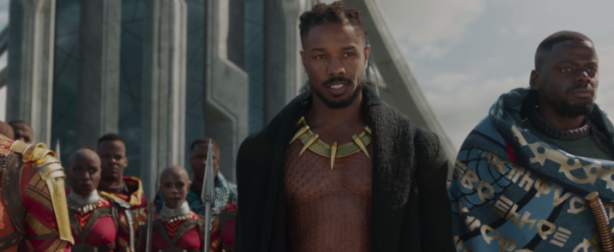
THE VERDICT
If you haven’t had a chance to see Black Panther yet, and this review hasn’t spoiled it, I would definitely go see it. Marvel has tried several times over the years to stay “fresh.” They sort of succeeded with Captain America: Winter Soldier and Ant-Man, but other times they’ve deviated from their formula it hasn’t exactly paid off for them. Black Panther is fresh in both visuals and story-telling. The cast brings the comic book to life in a way that few other super hero film casts have ever done. Unlike films like Iron Man, Thor, Captain America, etc. you could feel that there were actually consequences for the characters should they fail at what they were doing. And the idea of the mantle of responsibility is a theme that plays well for the characters in the film. If you were one of those kids who dreamt of being a hero, and even if you weren’t, we can all learn something from this movie. Well done Marvel. I hope you realize that Ryan Coogler’s film set a new standard for all Marvel films going forward. I hope you can rise to the occasion.
Reviewed by Josh Pederson
9/10
Blade Runner 2049 Review: A Nexus Well Worth Watching…
The Ratings Junkie
Wednesday, October 11, 2017
The Ratings Junkie

What will the future be for the Blade Runner series in Blade Runner 2049? (Warner Bros./Sony Pictures/Alcon Entertainment)
In the pantheon of film entertainment, Blade Runner has earned a place among sci-fi fans as a cinematic marvel that like the book it was based off (Phillip K. Dick’s “Do Androids Dream of Electric Sheep?“) was well ahead of its time. The 1982 theatrical version’s performance both critically and dollar wise at the time was systematically trounced with years of cult status success and revised editions that have re-interpreted director Ridley Scott’s film as a movie that has reached a very high standard due to its breakthrough audio and visual performance (for instance it places very high in my personal top 25 films). Now after 35 years its successor, Blade Runner 2049 (Warner Bros./Sony, Directed by Denis Villeneuve, Running time: 2 hours 43 minutes) hits theaters and has people asking if this movie can live up to its original’s lofty status.
The original Blade Runner film has become a staple of pop culture lore and has provided inspiration for countless films, music, television, anime, video game and fashion properties. The unique visuals, style and sound have helped the film reach its lofty cult status and help provide a further narrative with its approach to commercialization, industrialization, climate change and the possible future battle between humans and artificial intelligence (referred to as “replicants” in the films). When Villeneuve decided to take on the prospect of handling a sequel, he did so with the full understanding of the original film’s importance to the science fiction genre. It’s through his vision that provides some of the best moments of Blade Runner 2049, but it also provides some hiccups along the way.

LAPD agent K (played by Ryan Gosling) who serves on the force as a replicant “Blade Runner” (hunter of outdated and illegal androids) is sent to eliminate an older model (Dave Bautista) but in doing so makes a discovery that could create a larger conflict between humans and their android counterparts. What conflicts K’s character even further is where his path takes him during the film and the implications of how important his character might be to the future of replicant species. This new revelation sends the investigation into a different angle early on than the somewhat straight forward process of the first film and rather than continue on familiar ground this narrative approach pays off with a mystery worth uncovering.
The investigation does put K in the path of Niander Wallace (Jared Leto), who as the individual now responsible for crafting the current replicant universe (picking up the pieces of the Tyrell Corporation from the first film) sees this important discovery made by K as the key component for evolving his android creations even more. Now K must reach out and contact retired Blade Runner Matt Deckard (Harrison Ford) to learn more about this discovery before its too late. Brilliant performances are abound as Gosling’s (mainly) calm demeanor sets the tone for the film, Ford shows more emotional range than what he’s done in years and fine supporting turns by Bautista, Leto, Robin Wright, Lenny James, Ana de Armas as K’s artificial companion Joi and Sylvia Hoeks. The relative newcomer Hoeks plays character Luv, a right-hand replicant operative of Wallace who provides a brilliant foe for K in her commissioned quest to obtain this valuable evidence first without letting anything (or anyone) stand in her way.
To answer the question that many have been asking, “Should I see the original Blade Runner first?” the answer to that is that one probably should see the original as it will definitely fill in a lot of blanks for viewers if watched beforehand but even if not this film is still thoroughly enjoyable from beginning to end for those looking to jump right in just be entertained. The movie and the investigation contained within heavily intertwines itself with parts of the 1982 film yet still manages in many ways to find its own identity. Villeneuve has masterfully crafted a beautiful tale and along with stunning cinematography and music from Roger Deakins and Hans Zimmer respectively captures a style that is both captivating and engrossing as the audience gets sucked deeper into the Blade Runner universe.
There are some that have balked at the long run time (clocking in at almost three hours) as an excuse of staying away from watching the film. For those maybe apprehensive for that reason it is true the film overall would benefit even more from a shaving of scenes here and there but the movie itself at no time feels like a chore to get through as the wonderment of what is being experienced far outweighs any possible fatigue that even remotely could set in. Villenueve’s love for the original clearly comes through in his story telling and world-building but when reflecting on it even a 10% reduction in run time would have made this an even greater spectacle.
Recently, IGN’s Jim Vejvoda stated in a spoilercast that Blade Runner 2049 may not change the minds who think the original film was the best, but for those who appreciated the first they may find this sequel superior and may even allow fonder memories of the 1982 sci-fi classic. After thinking about it and watching the film on a personal level this past Friday it is understandable how one can see it that way. For many who view this sequel, it definitely can bring a finer appreciation of the original and may indeed spark another extended life for those who wish to see where it all began with Ridley Scott’s film.
Blade Runner 2049 proves something very difficult in today’s modern movie climate. It’s a story created well after the original hit theaters and a sequel that no one was clamoring for. But due to its technical brilliance, awe-inspiring score and narrative that intertwines with the original it bases its foundation off of but takes it one step further is a feature that can hold its proverbial head high as a film achievement that compares favorably to its infamous predecessor and despite its length-related flaws is far and away the best movie experience so far of 2017.

Subscribe to:
Posts (Atom)